
The problem
Antenna design brings together geometry, electromagnetic behavior, and performance requirements. Changing a design can mean running another expensive simulation. Optimization adds a further challenge: searching the possible designs while keeping the engineering goals and constraints explicit.
My contribution
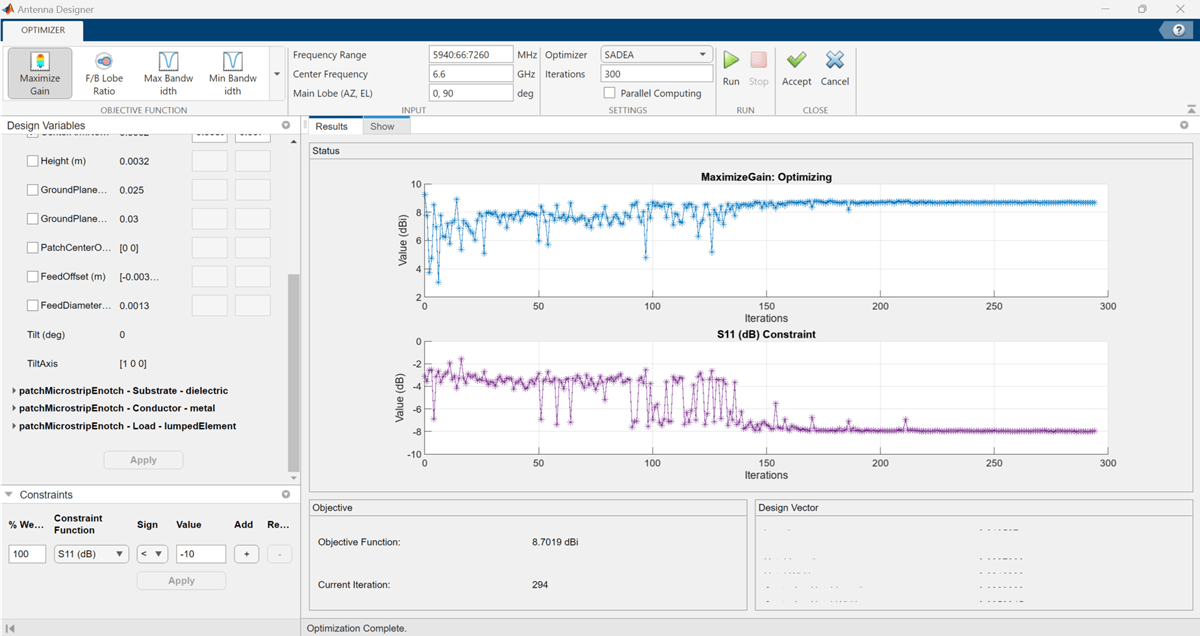
During my software engineering work at MathWorks, I worked on integrating surrogate-model optimization into MATLAB antenna-design workflows. My scope connected the optimization capability with the software and application experience through which engineers use it. This was work within an established product and team, rather than sole authorship of the underlying research or toolbox.
Connecting the model to the user
The useful output of an optimization tool is more than a candidate geometry. Engineers need to express a target, set meaningful bounds, inspect the result, and continue their analysis. My application work sat at that connection between a computational method and a workflow an engineer could operate.
A documented example
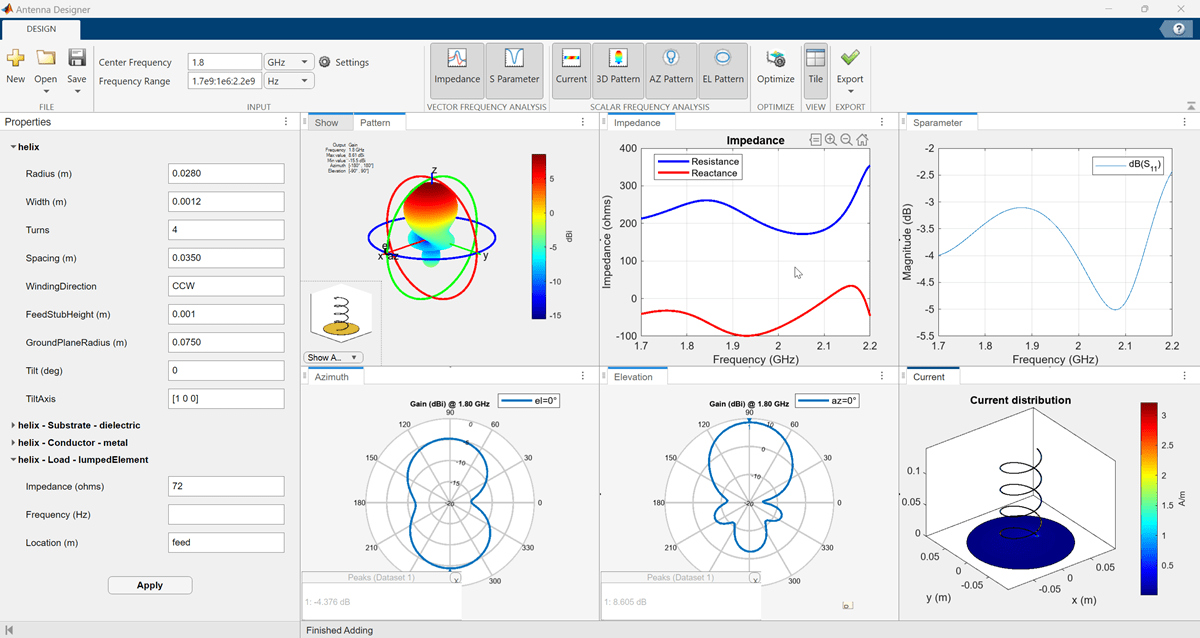
The linked MathWorks E-patch example shows a surrogate-model optimization workflow with design variables, objectives, and analysis of a resulting antenna. It offers a concrete way to understand the technical setting. It connects the design inputs with the analysis an engineer uses to evaluate the candidate antenna.
Engineering beyond the algorithm
Related work in my portfolio includes array-design applications and application architecture. Together these projects reflect the broader problem of fitting technical capabilities into software that people can explore and use. Interfaces, reusable architecture, and the model itself all contribute to the engineering experience.
Outcome and scope
The contribution described here is integration work in MATLAB antenna-design tools. The public example makes the workflow inspectable. Its usefulness depends on the design problem, the selected constraints, and the analysis of the candidate result.